Airfoil behind roll cage CFD analysis
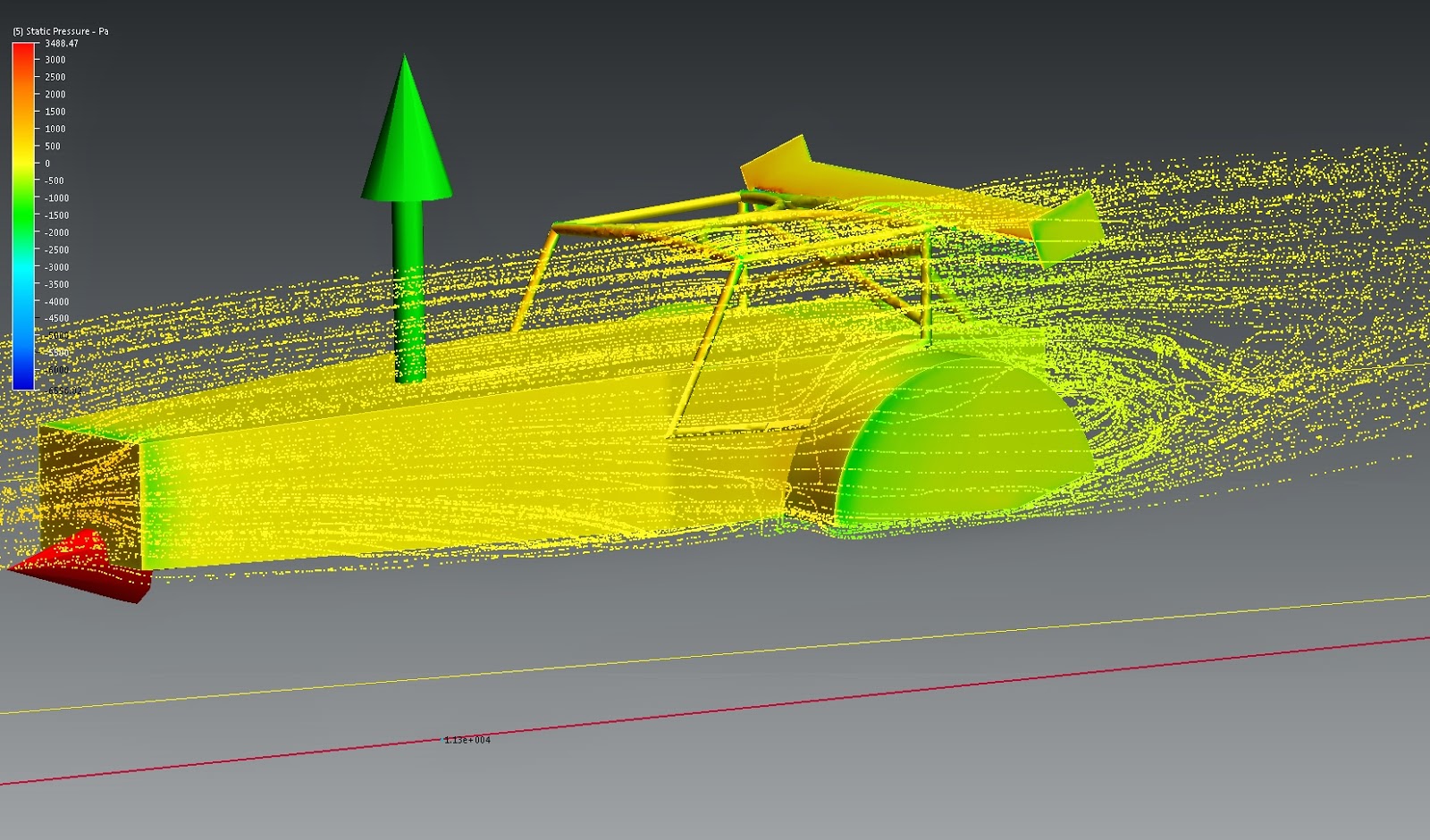
Does an airfoil generate downforce when placed behind a roll cage? Since I'm starting to get along with the CFD analysis software I did some more simulations.
The airfoil is a NACA 2312 at 160 km/h with 20° angle of attack. Length ~170 cm, width ~20 cm. As I suck on 3d modelling, none of the models correspond much with the real world. Neither the results probably, but can give an hint of what you could expect.
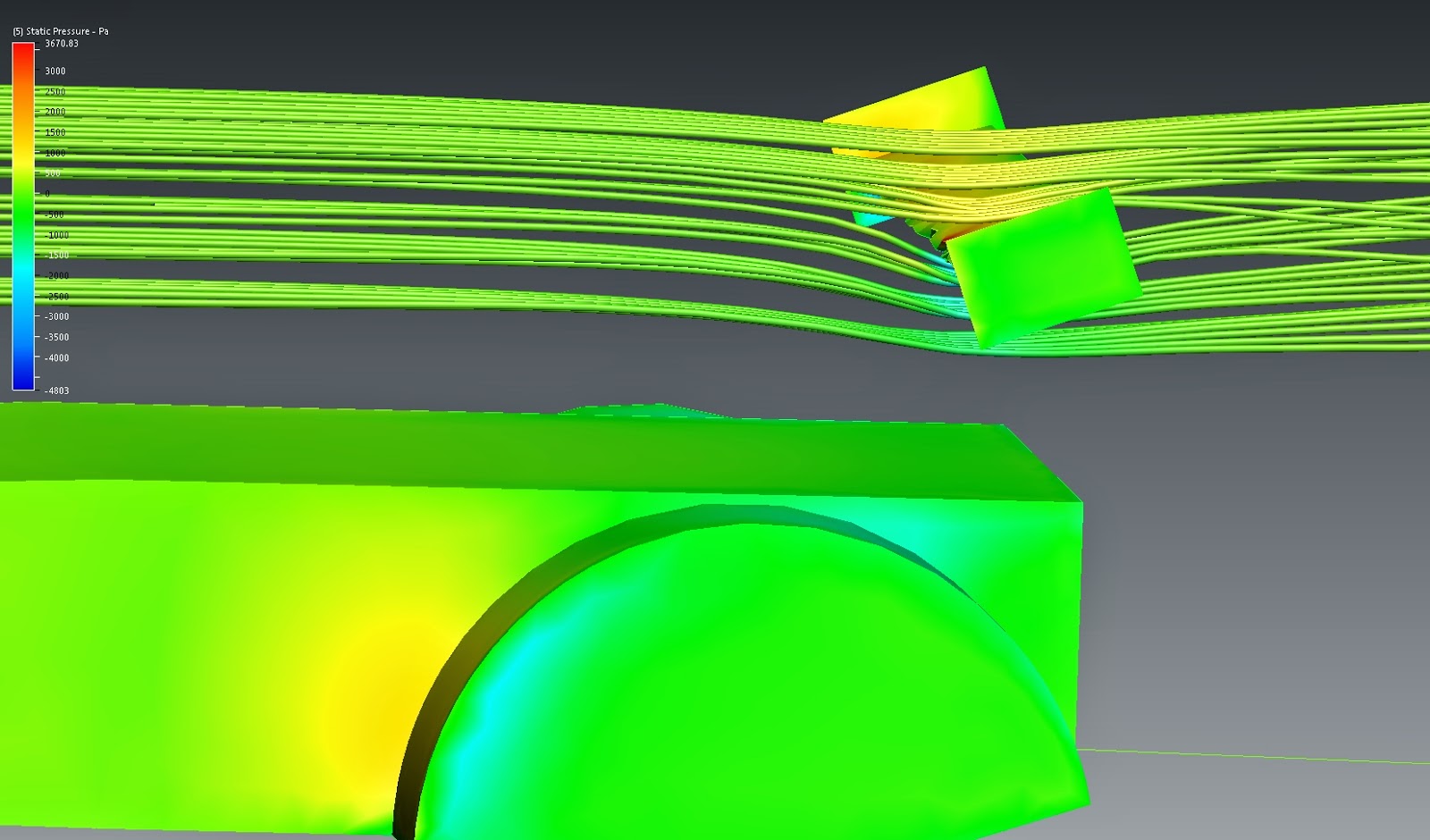
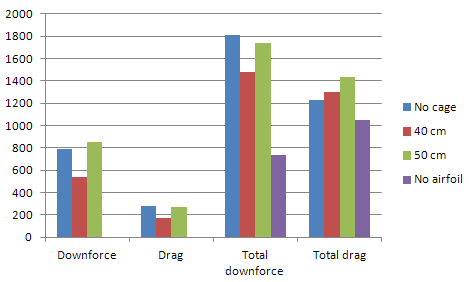
Scenario 1 - No roll cage, airfoil 40 cm above trunk
Airfoil downforce: 791 N
Airfoil drag: 282 N
Total downforce: 1810 N
Total drag: 1230 N
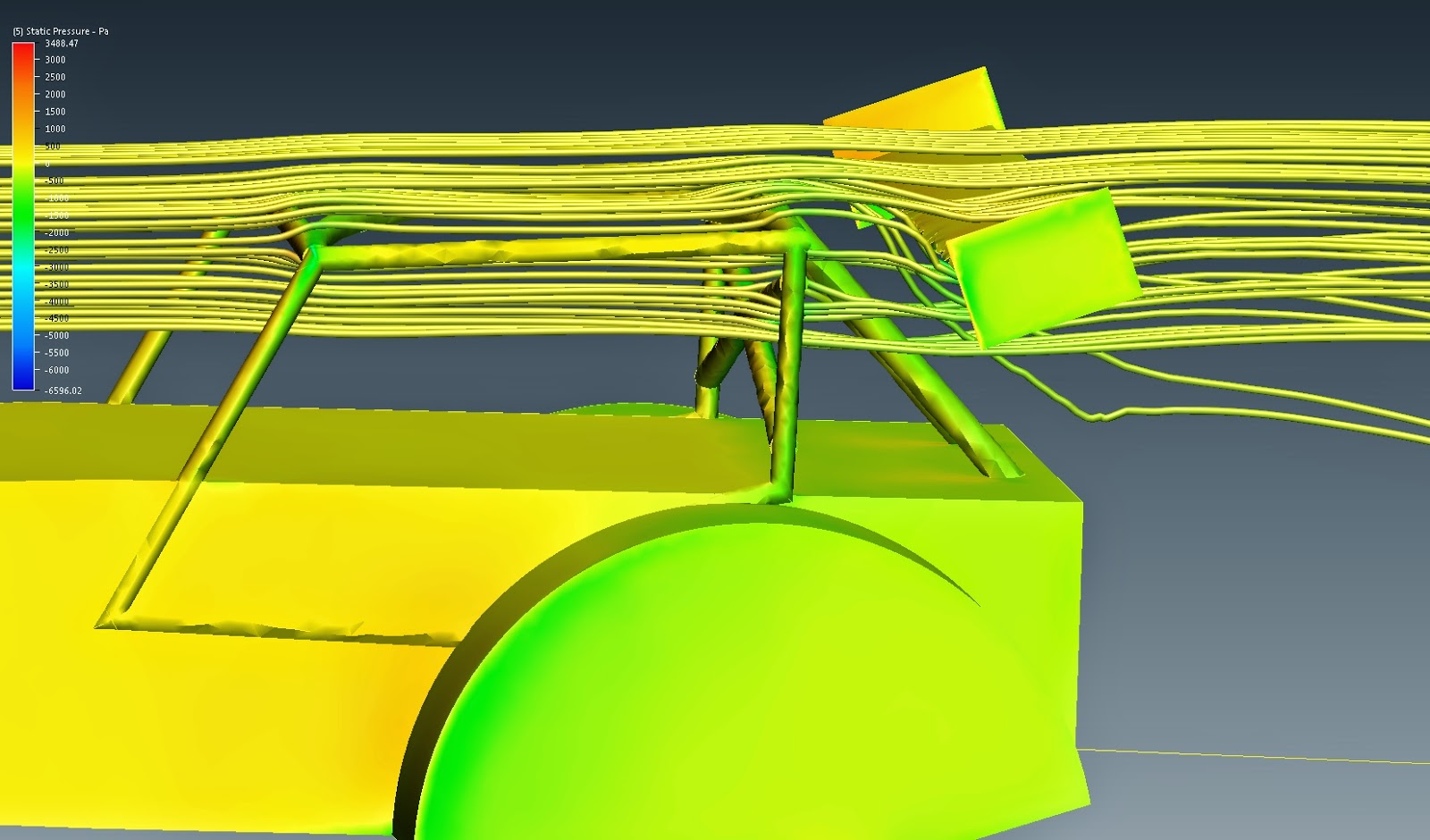
Scenario 2 - Airfoil 40 cm above trunk
Airfoil downforce: 542 N
Airfoil drag: 174 N
Total downforce: 1482 N
Total drag: 1296 N
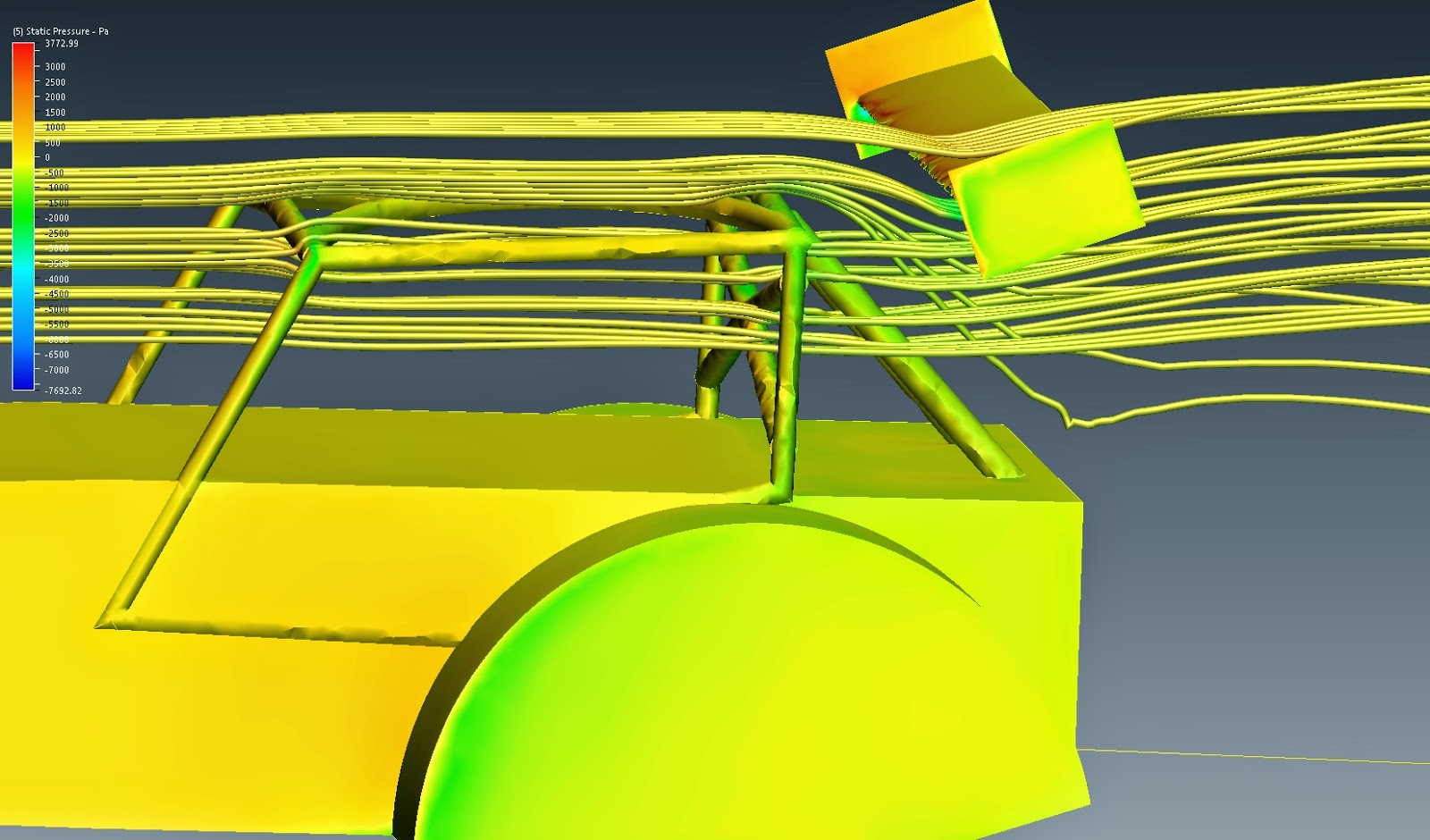
Scenario 3 - Airfoil 50 cm above trunk
Airfoil downforce: 857 N
Airfoil drag: 268 N
Total downforce: 1742 N
Total drag: 1438 N
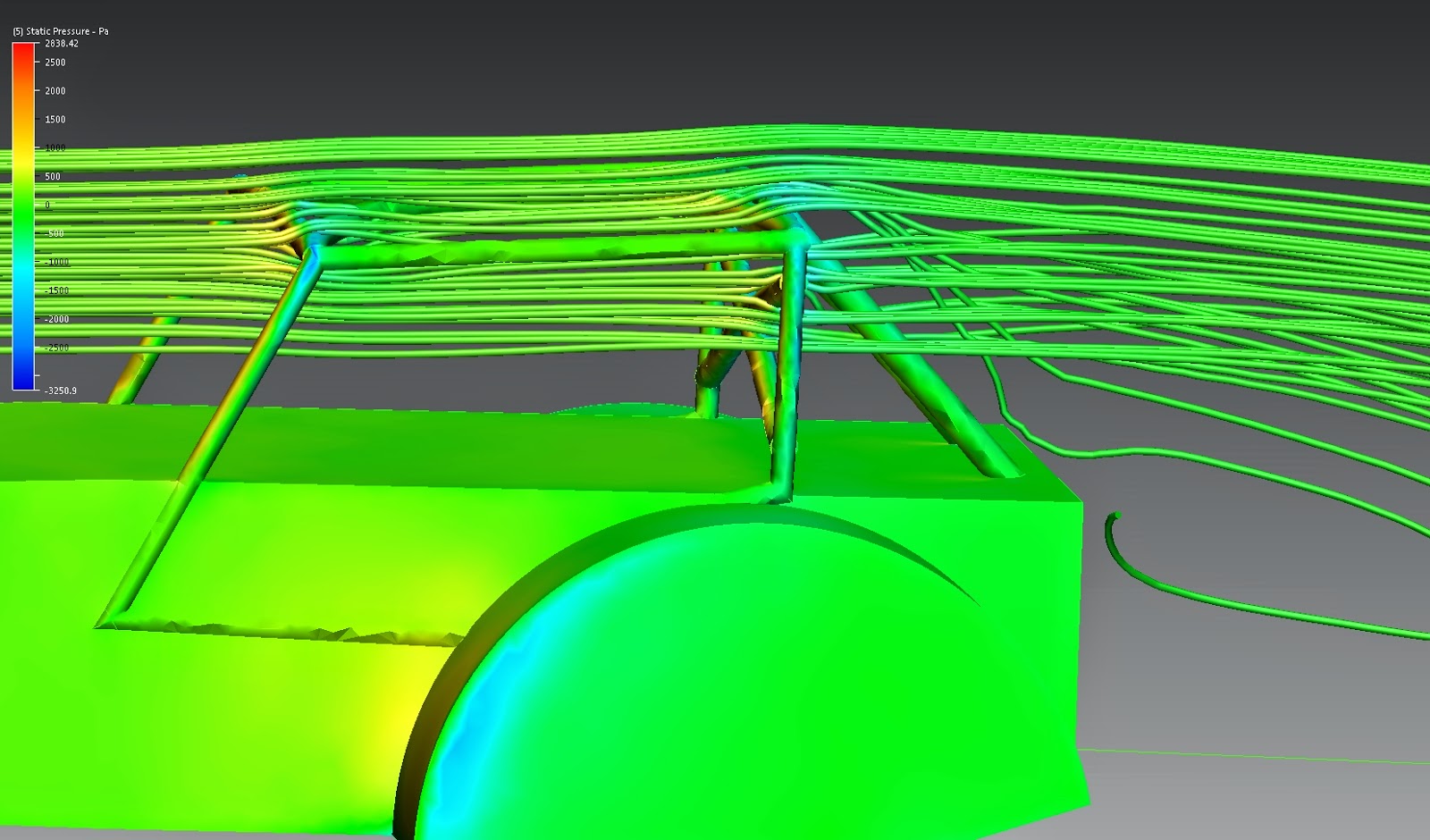
Scenario 4 - No airfoil
Total downforce: 738 N
Total drag: 1051 N
Conclusion:
A wide airfoil behind the roll cage does generate downforce, but raising it just a bit increase the effect dramatically. To no surprise, the outer parts of the wing are the most effective regions. Real world experiments are necessary to find the optimal location.
0 archived comments
Preserved from the original blog. New comments are closed.